
⚠️ Disclosure: QuickRate.Site participates in the Amazon Services LLC Associates Program.
We earn from qualifying purchases at no extra cost to you.
🤖 AI Notice: This content uses AI assistance.
All facts are verified by our editorial team.
🌍 LeapFrog Magic: The Globe That Brought the World to Our Living Room! ✨
How one interactive globe transformed screen time into a journey across continents
The complete American parent’s guide to choosing the perfect educational globe for curious minds
The LeapFrog Magic That Changed Everything
Picture this: It’s a Tuesday evening in suburban Ohio, homework is dragging on forever, and my eight-year-old son Tyler is complaining that geography is “the most boring subject ever invented.” He’s facing a big test on world capitals, but instead of studying, he’s staring at his textbook with the enthusiasm of someone watching paint dry. As a parent who believes learning should spark curiosity rather than crush it, I felt like I was failing—until the day we discovered the LeapFrog magic that completely transformed how our family explores the world.
Tyler had been struggling with geography all semester. Memorizing capitals, locating countries, understanding continents—it all felt like abstract information disconnected from real life. His teacher kept assigning map worksheets and flashcards, but Tyler would procrastinate for hours, dreading every geography assignment. The subject that should open children’s eyes to our incredible planet was instead becoming a source of anxiety and frustration.
Then came parent-teacher conference night. Tyler’s teacher mentioned struggling students often benefited from hands-on learning tools, specifically mentioning interactive globes. “Some kids need to see, hear, and touch geography rather than just reading about it,” she explained. That evening, I started researching educational globes and discovered something that looked almost too good to be true—a globe that promised to make geography interactive, engaging, and actually fun through LeapFrog magic technology.
I was skeptical. Could a toy really make that much difference? But the reviews from other parents were overwhelmingly positive. “My daughter went from hating geography to asking geography trivia at dinner!” one review proclaimed. “Best educational investment we’ve made,” another insisted. I decided to take the chance, reasoning that even if it didn’t transform Tyler’s geography grades, at least he’d learn something while having fun.
The LeapFrog magic arrived on a Friday afternoon. Tyler helped me unpack it, initially underwhelmed. “It’s just a globe, Mom,” he said with typical eight-year-old cynicism. Then he tapped the first country. The globe came alive with the national anthem, fascinating facts, and interactive games. Three hours later, I had to force him to stop for dinner. He’d explored five continents, learned dozens of capital cities, and asked to play “just one more game” approximately fifteen times.
Why This LeapFrog Magic Stands Out
Walk into any toy store or educational supply shop and you’ll find dozens of globe options ranging from basic plastic models to elaborate light-up displays. So what makes this particular LeapFrog magic globe the one American families consistently choose for their children’s education? It comes down to thoughtful design that balances genuine educational content with engaging interactive technology.

The Revolutionary Interactive Touchscreen System
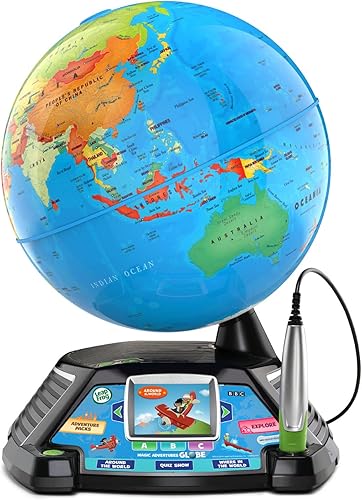
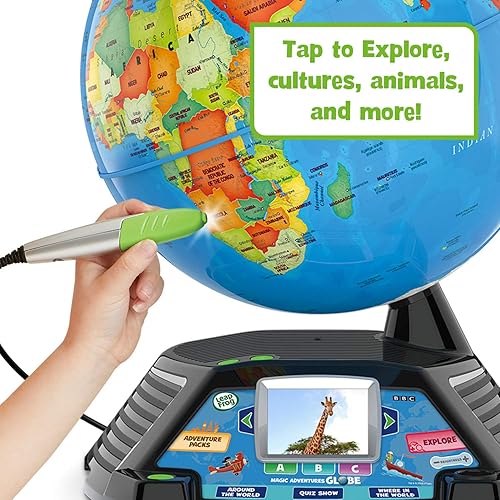
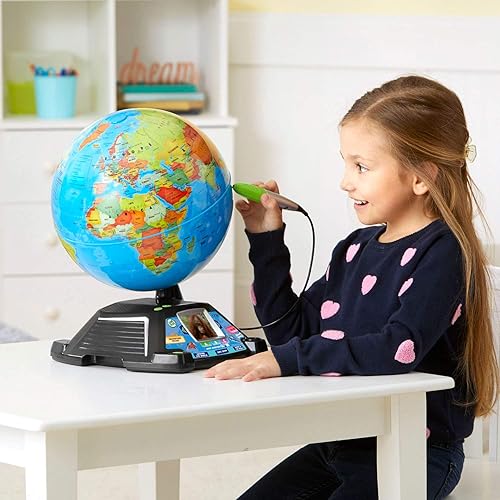
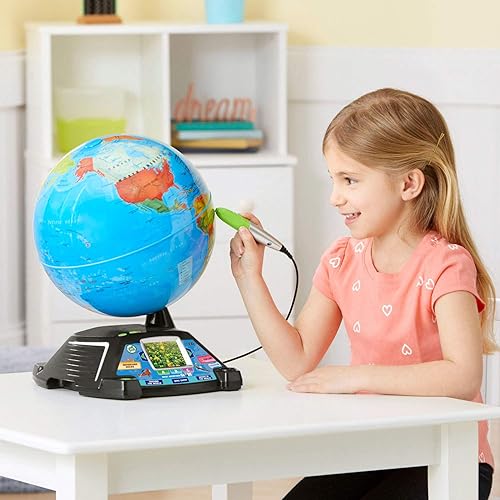
The defining feature of this LeapFrog magic is its incredibly responsive touch technology. Children simply tap any of the 600+ touchpoints on the globe’s surface, and the integrated 2.8-inch LCD screen immediately displays relevant information. Unlike old-fashioned globes requiring manual lookups or basic light-up models with limited information, this LeapFrog magic provides instant, comprehensive feedback that keeps children engaged and learning.
The touchscreen isn’t decorative—it’s educational magic that transforms passive observation into active exploration. Children tap France and instantly learn about the Eiffel Tower, hear “Bonjour,” discover famous French foods, and learn Paris is the capital. This immediate feedback loop creates the addictive quality of good video games while delivering substantive educational content. It’s the learning engagement that textbooks and traditional globes simply cannot match.
Over 600 Interactive Learning Touchpoints
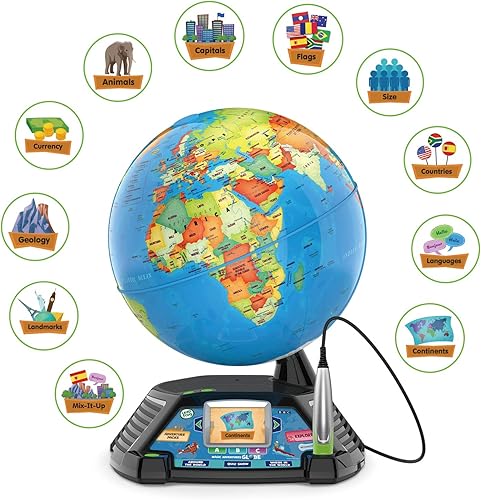
What sets this LeapFrog magic apart from cheaper interactive globes is the sheer depth of content. Over 600 individual touchpoints cover virtually every country, major city, significant landmark, and geographical feature on Earth. This isn’t superficial coverage—it’s comprehensive global education that grows with children from elementary school through middle school and beyond.
- Countries & Capitals: Complete information on 195+ countries including capitals, populations, and government systems that align with school curricula
- Cultural Knowledge: Traditional music, famous landmarks, typical foods, and cultural practices that bring geography to life beyond just locations
- Languages: Greetings in multiple languages with proper pronunciation, helping children understand global linguistic diversity
- Animals & Habitats: Native animals for different regions, teaching environmental geography and biodiversity naturally through LeapFrog magic
- Geographical Features: Information on continents, oceans, mountain ranges, and other physical geography concepts essential for academic success

Multiple Game Modes for Different Learning Styles
Perhaps the most brilliant aspect of this LeapFrog magic is the variety of interactive game modes that cater to different ages and learning styles. Rather than one-size-fits-all content, the globe adapts through multiple activity modes:
Around the World Mode: Children explore freely, tapping countries to learn facts at their own pace without pressure or competition. This mode suits curious explorers who prefer self-directed discovery and works perfectly for younger children still building basic geography knowledge.
Quiz Games: Multiple challenge modes test knowledge with escalating difficulty. “Find this country!” games build location skills. “What’s the capital?” challenges strengthen memory. “Where can you find this animal?” questions connect geography with biodiversity. These LeapFrog magic games transform testing into exciting competition.
Globe Trotting Race: A timed adventure where children race against the clock to locate countries, capitals, or landmarks. This fast-paced mode appeals to competitive kids who thrive on challenge and creates the adrenaline rush that makes learning memorable rather than monotonous.
Global Discovery: Extended learning modules that dive deeper into specific topics like world cultures, famous landmarks, or environmental regions. This mode satisfies older children ready for more sophisticated content beyond basic geography facts.
BBC-Voiced Educational Content
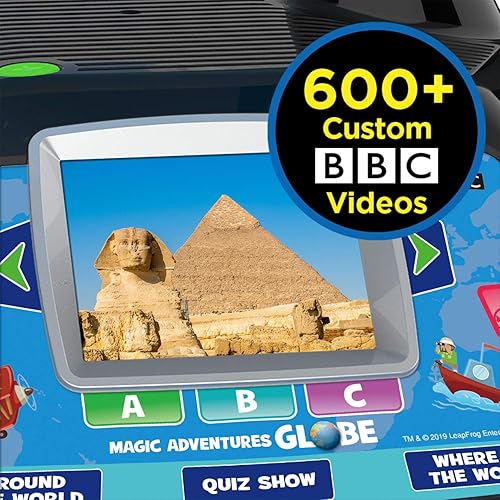
The audio quality and educational content of this LeapFrog magic features professional narration from BBC personalities, lending credibility and production value missing from cheaper educational toys. The clear pronunciation, engaging delivery, and authoritative tone make learning feel legitimate rather than simplistic. Children subconsciously recognize quality content, and the professional voicework signals that this LeapFrog magic is serious education disguised as entertainment.
Perfect Physical Design for Family Use
The globe measures approximately 10 inches in diameter—substantial enough to see details clearly, compact enough to fit on standard desks or bookshelves without dominating entire rooms. The sturdy base keeps it stable during enthusiastic tapping. The rotating mechanism works smoothly, allowing children to spin and explore different hemispheres easily. This LeapFrog magic is built for real family use, not delicate display.
The Hidden Educational Value of LeapFrog Magic
What makes this LeapFrog magic exceptional isn’t just the impressive technology—it’s how that technology delivers genuine educational benefits that support children’s academic development and broaden their understanding of our world.

Geography Mastery That Supports School Success
This LeapFrog magic directly supports geography curricula taught in American schools from elementary through middle school. The content aligns with educational standards for geographical literacy: locating countries and capitals, identifying continents and oceans, understanding physical geography features, and recognizing cultural and political boundaries. Children using this globe regularly demonstrate measurably improved performance on geography tests and assignments.
Beyond test preparation, the LeapFrog magic builds spatial awareness—the ability to mentally visualize and manipulate geographical relationships. This cognitive skill transfers to mathematics, science, and even reading comprehension. Children who understand how countries relate spatially develop stronger overall analytical thinking capabilities.
Cultural Awareness and Global Citizenship
Perhaps the most profound benefit of this LeapFrog magic is how it naturally cultivates cultural awareness and global thinking. When children tap Brazil and hear Portuguese greetings, learn about Carnival celebrations, and discover the Amazon rainforest, they begin understanding our world’s incredible diversity. This early exposure to different cultures, languages, and traditions builds the foundation for the global citizenship American children need for their increasingly interconnected futures.
The LeapFrog magic makes abstract concepts like “other countries” concrete and relatable. Children stop thinking of foreign places as mysterious or scary and start viewing them as fascinating destinations they’d like to visit someday. This geographical curiosity often sparks broader interests in languages, history, international relations, and cultural studies that influence academic and career paths years later.
Memory Development and Retention
The multi-sensory learning approach of this LeapFrog magic—visual globe representation, audio facts and music, kinesthetic tapping interaction, and cognitive game challenges—creates powerful memory encoding. Children remember information better when multiple senses process it simultaneously. The capital they learned while hearing the national anthem and tapping the country sticks in memory far better than simple textbook memorization.
The game modes specifically build memory through retrieval practice—the most effective learning technique according to cognitive science research. When children play “Find this capital!” games on the LeapFrog magic, they’re actively recalling information, which strengthens neural pathways and creates lasting knowledge rather than temporary memorization that evaporates after tests.
Independent Learning and Curiosity
Unlike traditional learning that requires parent or teacher direction, this LeapFrog magic enables genuinely independent exploration. Children as young as five can navigate the interface, discover new facts, and challenge themselves through games without adult intervention. This self-directed learning builds confidence, curiosity, and the internal motivation that creates lifelong learners rather than children who only engage when forced.
Parents consistently report that the LeapFrog magic inspires questions extending far beyond the globe itself. “Where is that country you were talking about?” “Can we try food from there?” “What language do they speak?” These spontaneous inquiries demonstrate the genuine intellectual engagement the globe creates—the holy grail of education.
Screen Time That Parents Can Feel Good About
American parents constantly struggle with screen time balance. This LeapFrog magic offers a rare category: screen-based technology that delivers legitimate educational value without the passive consumption concerns of tablets or television. The interaction is active and purposeful. The content is curated and educational. The screen isn’t addictive in the problematic sense—children emerge from globe sessions having learned substantial information rather than just being entertained momentarily.
How This LeapFrog Magic Fits American Family Life
American families face unique challenges balancing educational priorities, busy schedules, limited attention spans, and technology that often distracts more than teaches. This LeapFrog magic addresses these real-world concerns with remarkable effectiveness.
The Homework Helper Parents Dream About
Every American parent with school-age children knows the homework battle. Geography assignments, social studies projects, current events discussions—these typically involve frustrated internet searches and boring textbook readings. This LeapFrog magic transforms homework from dreaded obligation into engaging exploration. Tyler now actually asks to “work on geography” because the globe makes it fun rather than tedious.
The LeapFrog magic specifically helps with common geography assignments: labeling map worksheets (children reference the globe for country locations), capital memorization (quiz modes make practicing feel like games), continent and ocean identification (visual representation reinforces spatial learning), and cultural research projects (comprehensive information provides authentic starting points). Homework that previously took an hour of nagging now happens willingly in 20 minutes of engaged learning.
Multi-Child Educational Investment
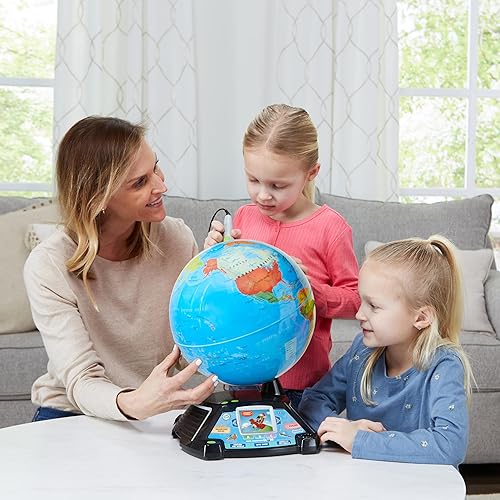
For families with multiple children across different ages, this LeapFrog magic delivers exceptional value through age-adaptive content. The same globe entertains a five-year-old learning continent names while challenging a twelve-year-old mastering world capitals and cultural details. The various game difficulty levels and free exploration mode mean each child engages at their appropriate level without requiring separate products.
Siblings often play collaborative games or compete in friendly geography challenges using the LeapFrog magic, turning solo learning into social activity. “I bet I can find more countries in Europe than you!” becomes educational entertainment that builds both knowledge and relationships rather than creating screen-time isolation.
Screen Alternative That Actually Works
The hardest challenge for modern parents is finding engaging alternatives to addictive tablets and video games. This LeapFrog magic is one of the few screen-based products that children willingly choose over purely entertainment devices. The interactive technology feels contemporary and engaging enough to compete with games, while the educational content ensures you’re not just substituting one mindless screen for another.
When Tyler asks for “screen time” now, we often suggest the globe first. Surprisingly often, he agrees enthusiastically and spends 30-45 minutes exploring the world rather than watching random YouTube videos. That voluntary choice—preferring educational interaction over passive entertainment—represents the ultimate parent victory.
Dinner Table Conversation Starter
An unexpected benefit of this LeapFrog magic is how it enhances family conversations. Tyler constantly shares fascinating facts he’s discovered: “Did you know Costa Rica doesn’t have a military?” “The capital of Mongolia is Ulaanbaatar!” “Madagascar has animals that don’t exist anywhere else!” These spontaneous geography lessons make dinner interesting and demonstrate that learning doesn’t stop when school ends.
The LeapFrog magic also connects beautifully to current events. When news mentions a country, children can immediately locate it on their globe, learn about its culture, and understand context that makes news meaningful rather than abstract. This real-world application of geographical knowledge creates engaged, informed young citizens.
Travel Planning and Cultural Preparation
Families planning vacations or relocations use this LeapFrog magic to prepare children for new experiences. Before our trip to Mexico, Tyler spent weeks exploring Mexican states, learning basic Spanish phrases from the globe, and discovering cultural traditions. This preparation transformed a potentially overwhelming experience into an exciting adventure where he already felt connected to the destination.
Similarly, families with international backgrounds use the LeapFrog magic to maintain connections to heritage cultures. Children explore countries where grandparents were born, learn about family origins, and develop pride in their multicultural identities through hands-on geographical engagement.
Pro Usage Tips for Maximum Educational Value
Position the LeapFrog magic in a central family area rather than isolated in a bedroom—accessibility increases usage frequency. Establish a “geography challenge of the week” where family members compete to master specific regions or topics. Connect globe learning to current events by having children locate countries mentioned in news stories. Use the quiz modes as genuine test preparation for geography exams rather than just recreational play. Encourage children to keep a “countries visited” list on the globe, tracking both real travels and virtual explorations. Pair globe sessions with related activities like trying international foods, watching documentaries about discovered countries, or reading books set in explored locations to deepen learning beyond the screen.
LeapFrog Magic Comparison: Finding Your Perfect Globe
American families face overwhelming choices when selecting educational globes. How does this LeapFrog magic compare to alternatives across different price points, technology levels, and educational approaches?
As an Amazon Associate, we earn from qualifying purchases at no extra cost to you.
Interactive LeapFrog Magic vs. Traditional Decorative Globes
Traditional desk globes offer beautiful aesthetics and tactile spinning but provide zero educational engagement beyond passive viewing. Children quickly lose interest in static globes after initial novelty wears off. This LeapFrog magic costs more upfront but delivers exponentially more educational value through interactive technology that sustains interest for years rather than weeks. For families prioritizing actual learning over decorative display, interactive technology wins decisively.
The price difference between quality traditional globes and this LeapFrog magic is often smaller than parents expect. When you factor in the educational content, game variety, and lasting engagement, the interactive technology represents better value per hour of meaningful use.
LeapFrog Magic vs. Cheaper Interactive Globe Competitors
Budget interactive globes exist at lower price points, but they typically sacrifice content depth, audio quality, or durability. Cheaper alternatives might have 100-200 touchpoints versus this LeapFrog magic’s 600+ comprehensive coverage. Their audio often features robotic voices and basic facts versus the BBC-quality narration and rich content here. After months of use, budget globes frequently malfunction while this LeapFrog magic remains reliable.
Educational quality matters profoundly. A globe that teaches incorrect or superficial information is worse than no globe at all. LeapFrog’s reputation for educational integrity means content is accurate, age-appropriate, and aligned with school curricula—critical factors that generic manufacturers often ignore in pursuit of lower costs.
| Feature | This LeapFrog Magic | Traditional Globe | Budget Interactive | Premium AR Globe |
|---|---|---|---|---|
| Touchpoints | 600+ comprehensive | 0 (manual only) | 100-200 basic | 300+ with app |
| LCD Screen | ✅ 2.8″ integrated | ❌ None | ⚠️ Basic display | ❌ Requires device |
| Game Modes | Multiple levels/types | None | 1-2 basic games | Extensive with app |
| Audio Quality | BBC professionals | Silent | Robotic/basic | Variable (app-dependent) |
| Age Range | 5-12+ years optimal | All ages (limited value) | 5-8 years before outgrowing | 8-14 years (tech-savvy) |
| Setup Required | ✅ Batteries only | ✅ None (ready) | ✅ Batteries only | ❌ App + device needed |
| Screen-Free Option | ✅ Self-contained | ✅ Fully physical | ✅ Self-contained | ❌ Requires tablet/phone |
| Best For | Active learning engagement | Room decoration | Tight budgets | Tech-forward families |
LeapFrog Magic vs. AR/App-Based Globe Systems
Premium augmented reality globes paired with tablet apps offer impressive visual effects and extended content. However, they require ongoing device availability, app downloads, and technology management that many families find frustrating. This self-contained LeapFrog magic works independently—no tablets, phones, or internet connections required. Children access it instantly without asking permission to use family devices or dealing with app updates and compatibility issues.
The self-contained design also means no additional screen time concerns. When children use tablet-dependent globes, they’re technically using tablets—the gateway to other apps and distractions. This LeapFrog magic eliminates that temptation through single-purpose educational focus that parents can feel completely comfortable allowing.
LeapFrog Magic: The Complete Honest Assessment
After six months of daily use, homework assistance, family game nights, and watching Tyler’s geography knowledge expand dramatically, here’s the unvarnished truth about what this LeapFrog magic does brilliantly and where it has natural limitations.
Why This LeapFrog Magic Excels
- 600+ interactive touchpoints provide comprehensive global education
- 2.8-inch LCD screen delivers clear, engaging visual information
- Multiple game modes adapt to different ages and learning styles
- BBC-quality audio narration ensures professional educational content
- Self-contained design works without tablets, apps, or internet
- Aligns perfectly with American school geography curricula
- Builds cultural awareness and global citizenship naturally
- Encourages independent learning without constant parent supervision
- Durable construction withstands enthusiastic child use
- Volume control allows use in various family situations
- Measurably improves geography test scores and knowledge retention
- Serves wide age range from elementary through middle school
- Screen time that delivers genuine educational value
- Makes homework engaging rather than dreaded obligation
- Sparks curiosity and questions extending beyond the globe itself
Limitations to Consider
- Requires 4 AA batteries (not included) with moderate replacement frequency
- Touchscreen can be less responsive with very light taps from young children
- LCD screen size limits amount of text displayed at once
- Audio volume at maximum may not work in very noisy environments
- Political boundaries become outdated as world changes (though less frequent than concern)
- Not suitable for children under 5 without parent participation
- Plastic construction lacks premium feel of expensive traditional globes
- No headphone jack for private listening in shared spaces
Maximizing Your LeapFrog Magic
Getting the most from this educational investment requires understanding both practical maintenance and strategic usage approaches that extend learning beyond simple play.
Initial Setup and Placement
Unboxing this LeapFrog magic takes under 5 minutes. Install 4 AA batteries in the base compartment, ensure the globe is properly seated on its base, and power on. The initial startup includes a welcome message and brief tutorial demonstrating the basic tap interaction. Most children grasp the interface immediately without extensive adult explanation.
Strategic placement matters for usage frequency. Position the LeapFrog magic in a central family area—living room bookshelf, kitchen counter, dining room sideboard—rather than isolated in a child’s bedroom. Accessibility dramatically increases engagement. When the globe sits where children naturally spend time, they interact with it spontaneously rather than requiring special trips to bedroom “learning zones.”
Battery Management
Battery life varies based on usage frequency but typically lasts 2-3 months with regular daily use. The LeapFrog magic provides low-battery warnings before complete power loss. Consider using rechargeable AA batteries to reduce ongoing costs and environmental impact. Keep spare batteries available to avoid disappointment when power runs out during excited exploration or homework sessions.
Pro tip: The globe powers down automatically after several minutes of inactivity, conserving battery life. However, children often forget to turn it off manually after use. Teaching the power-down habit extends battery life significantly and makes this LeapFrog magic more economical long-term.
Cleaning and Maintenance
Maintaining this LeapFrog magic requires minimal effort. Wipe the surface with a slightly damp microfiber cloth to remove fingerprints and dust from the globe and LCD screen. Avoid excessive moisture near electronic components or battery compartment. The durable plastic construction resists typical wear from handling, though extremely rough treatment can damage touch sensitivity.
Check periodically that the globe rotates smoothly on its base. If rotation becomes stiff, check for debris in the rotation mechanism and clear if necessary. Ensure the base remains stable—wobbling indicates improper seating that should be corrected to prevent tipping.
Educational Enhancement Strategies
Transform this LeapFrog magic from occasional toy into comprehensive learning tool through strategic usage approaches:
Homework Integration: Make the globe the first reference for geography assignments before allowing internet searches. Children learn better from hands-on exploration than passive website reading. “Find it on the globe first” should become the family geography research rule.
Current Events Connection: Whenever news mentions countries, immediately locate them on the LeapFrog magic and explore related information. This practice makes abstract news concrete and teaches children to contextualize global events geographically.
Family Geography Challenges: Establish regular competitions using quiz modes. “Saturday Geography Showdown” or “Capital City Challenge Night” transform learning into entertaining family bonding while building knowledge through friendly competition.
Goal Setting and Tracking: Help children set learning objectives: “Master all European capitals by month end” or “Learn greeting in 20 different languages.” Track progress and celebrate achievements, making the LeapFrog magic part of structured learning rather than just random play.
Troubleshooting Common Issues
Touch points not responding: First, check battery level—low power affects touch sensitivity significantly. Clean the globe surface, as dirt or oils interfere with touch recognition. Ensure proper tapping technique—firm, deliberate touches work better than light brushing.
Audio quality problems: Verify volume is turned up adequately and speakers aren’t obstructed. Check batteries, as weak power reduces audio quality. If problems persist after fresh batteries and cleaning, contact LeapFrog customer service for warranty support.
LCD screen issues: If the screen appears dim or doesn’t display, check batteries first. Ensure the globe is properly powered on. Clean the screen gently with appropriate electronics-safe cloth. Avoid excessive pressure on the screen during use.
Content feels outdated: While political boundaries occasionally change, the core educational content remains accurate for years. LeapFrog occasionally releases content updates—check their website for any available updates for your model.
Every question answered from real American families
What age range works best for this LeapFrog magic?
Does this LeapFrog magic require internet or app downloads?
How does this LeapFrog magic help with school geography?
What kind of batteries does the LeapFrog magic use and how long do they last?
Can multiple children at different ages use this LeapFrog magic?
Is the educational content in this LeapFrog magic accurate and up-to-date?
How durable is this LeapFrog magic with regular kid use?
Can you control the volume on this LeapFrog magic?
Does this LeapFrog magic teach languages or just geography?
How does the quiz mode work on this LeapFrog magic?
Is this LeapFrog magic worth the investment for one child?
Can this LeapFrog magic help with homeschooling geography?
Why This LeapFrog Magic Works for American Families
After six months of watching Tyler transform from a geography-dreading student to a child who voluntarily explores the world, answers geography questions at dinner, and actually looks forward to social studies class, here’s the definitive assessment: this LeapFrog magic succeeds because it understands the difference between educational gadgets that promise learning and educational tools that actually deliver it.
This LeapFrog magic doesn’t try to be everything—it won’t satisfy teenagers seeking university-level geographical analysis, won’t work for families completely opposed to electronic learning tools, and won’t appeal to collectors wanting antique globe aesthetics. And that’s perfectly acceptable, because those aren’t the challenges it’s designed to solve.
What this LeapFrog magic does brilliantly is make geography accessible, engaging, and genuinely educational for the age group that needs it most: elementary and middle school children building foundational knowledge about our world. These are years when geographical literacy either develops or gets permanently dismissed as boring—and that determination often depends on how geography is presented.
No Responses