
⚠️ Disclosure: QuickRate.Site participates in the Amazon Services LLC Associates Program.
We earn from qualifying purchases at no extra cost to you.
🤖 AI Notice: This content uses AI assistance.
All facts are verified by our editorial team.
🌈 The Ultimate Water Table Adventure: Rain Showers & Rainbows! 💦
How a magical water table transformed our backyard into an aquatic wonderland
The complete American parent’s guide to choosing the perfect water table for endless summer fun
The Water Table That Changed Everything
Picture this: It’s a sweltering July afternoon in suburban Texas, the thermometer reading 95 degrees, and my three-year-old twins are literally bouncing off the walls with pent-up energy. The splash pad at the community park is packed with screaming children, the kiddie pool looks like a scene from Jaws, and I’m desperately searching for a way to keep them cool, active, and—dare I dream—entertained for more than fifteen minutes. That’s when I discovered the magic of a proper water table that completely transformed our summer routine.

My twins, Emma and Jack, had been asking for a pool constantly. But between our small yard, safety concerns about standing water, and the maintenance nightmare pools represent, I kept putting it off. Every hot day brought the same arguments, the same tears, the same exhaustion from trying to keep energetic toddlers happy indoors with the air conditioning cranked to arctic levels.
Then came the neighborhood playdate that changed our entire summer. Our friends unveiled their new water table setup—this incredible double-tier system with a rain effect, spinning rainbows, and enough interactive features to captivate even the most distractible preschoolers. Emma and Jack spent three solid hours playing with that water table, rotating between scooping water, creating “rain,” racing floating toys, and engaging in elaborate water-themed imaginative play I’d never witnessed before.
That evening, they didn’t ask for screens. They didn’t fight at bedtime. They were healthily tired from hours of active outdoor play. The next morning, the first question wasn’t “Can we watch TV?” but “Can we go back to the rain water table?” I ordered our own that afternoon.
Why This Water Table Stands Out
Walk into any toy store and you’ll find dozens of water table options ranging from simple plastic tubs to elaborate multi-level structures. So what makes this particular water table the one American families consistently choose summer after summer? It comes down to thoughtful engineering that creates genuine play value beyond simple water splashing.
The Revolutionary Rain Shower System
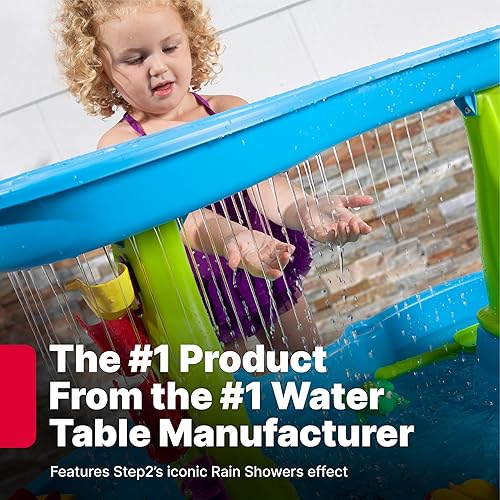
The defining feature of this is its innovative two-tier design that creates authentic rainfall. Children scoop water from the large lower pond and pour it into the elevated upper tray. The water then cascades down through multiple channels, activating spinners, wheels, and other interactive elements, creating a mesmerizing rain effect that never fails to delight toddlers and preschoolers.
This isn’t decorative—it’s educational magic disguised as play. The rain system teaches cause-and-effect relationships: pour water at the top, watch predictable results throughout it. Children experiment with different water volumes, discovering how the amount they pour affects rain intensity and duration. They’re learning fundamental physics principles about gravity, water flow, and volume without realizing they’re engaged in STEM education.
The Spinning Rainbow Wonder Wheel
Positioned in the upper tier of this sits a colorful rainbow wheel that spins when water flows over it. This simple feature captivates children for extended periods as they experiment with controlling the wheel’s speed through water flow manipulation. They discover that gentle pouring creates slow, controlled spinning, while enthusiastic dumping creates rapid rotation.
- Visual Stimulation: The vibrant rainbow colors spinning under flowing water create mesmerizing visual effects that capture attention
- Motor Skill Development: Controlling water flow to affect wheel speed builds fine motor coordination and hand-eye accuracy
- Scientific Learning: Children naturally experiment with water pressure, flow rates, and mechanical cause-and-effect
- Sustained Engagement: The dynamic, changeable nature of it wheel prevents boredom that static toys create
The Incredible Customizable Maze Wall
Perhaps the most brilliant feature of this is the put-and-place maze wall that children can reconfigure into 24 different water path arrangements. Three separate maze pieces can be positioned in various combinations on it side, creating unique water channels each time. This single feature alone provides weeks of varied play as children engineer different pathways and observe how water travels through their custom designs.
The educational value here is extraordinary. Children engage in basic engineering thinking—planning routes, predicting water flow, testing theories, and adjusting designs based on results. They’re problem-solving, creating hypotheses, and learning from both successes and failures. this transforms into a hands-on engineering laboratory where mistakes are fun discoveries rather than frustrations.
The Complete 13-Piece Accessory Collection
this arrives with everything needed for immediate, engaging play. The 13-piece set includes perfectly sized scooping cups in multiple sizes, a large bucket for major water transfers, a strainer that demonstrates filtering concepts, animal-shaped water squirters that add imaginative play elements, and a flipper toy that creates additional water manipulation possibilities.
What makes these water table accessories special is their thoughtful scaling and purpose. Each piece fits comfortably in toddler hands, encourages different motor skills, and enables distinct play patterns. The variety prevents the monotony that happens with generic water toys, ensuring children discover new activities and combinations throughout multiple play sessions.
The Generous Dual-Level Design
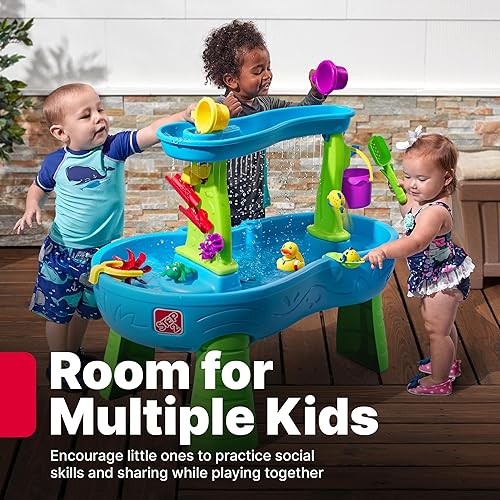
The two-tier structure of this creates distinct play zones that accommodate multiple children simultaneously without crowding. The large lower pond basin holds approximately 5 gallons, providing ample water for scooping, splashing, and floating toys. The elevated upper tray creates a second activity area for rain creation and spinner play. This water table design naturally distributes children around different features, reducing conflicts and enabling genuine collaborative play.
The Hidden Educational Value of Water Table Play
What busy American parents might not realize is that water play represents one of the most developmentally rich activities available for young children. This isn’t frivolous entertainment—it’s multi-faceted learning that addresses physical, cognitive, social, and emotional development simultaneously.
Fine Motor Skill Development
Every scoop, pour, squeeze, and manipulation at this builds the small muscle control essential for future tasks like writing, eating with utensils, buttoning clothes, and countless daily independence skills. Transferring water between cups requires hand-eye coordination. Squeezing water squirters strengthens grip muscles. Positioning maze pieces develops precision movements. These water table activities provide targeted occupational therapy benefits disguised as pure play.
The variety of accessories in this set ensures comprehensive motor development. Large buckets build arm strength through carrying. Small cups refine pincer grasp. The flipper and spinner encourage bilateral coordination—using both hands together in coordinated ways. Physical therapists frequently recommend water tables for exactly these developmental benefits.
Scientific Thinking and STEM Foundations
this becomes a natural science laboratory where children conduct experiments constantly without realizing it. They test hypotheses: “What happens if I pour water here?” They observe patterns: “The wheel spins faster with more water.” They identify cause-and-effect: “When I block this channel, water goes that way instead.” These are foundational scientific thinking skills that will serve them throughout their educational journey.
The customizable maze wall on this specifically builds engineering mindset. Children design water paths, predict outcomes, test their theories, analyze results, and redesign based on observations. This is the engineering design process—the exact methodology professional engineers use—emerging naturally through play. Early exposure to these thinking patterns creates cognitive frameworks that support future STEM learning.
Sensory Processing and Regulation
Water play provides critical sensory input that helps children process and organize sensory information. The feeling of water on skin, the sound of splashing, the visual stimulation of flowing water, the temperature changes, the proprioceptive feedback from scooping and pouring—this multi-sensory water table experience helps developing nervous systems learn to integrate and respond to sensory input appropriately.
For children with sensory processing differences, this offers therapeutic value. The predictable, controllable water environment allows them to explore sensory experiences at their own pace. Occupational therapists frequently use water tables in sensory integration therapy because they provide rich sensory feedback in a safe, manageable context.
Social Skills and Cooperative Play
When multiple children gather around this, remarkable social learning occurs. They negotiate who uses which accessory. They cooperate to create elaborate water flow systems. They communicate about their discoveries and ideas. They practice turn-taking with popular features. They resolve conflicts over shared resources. These water table interactions build social-emotional skills essential for future school success and lifelong relationships.
The multi-station design of this specifically supports positive social interaction. Rather than forcing children to share a single activity, the various features—pond basin, rain effect, spinner, maze wall—create natural play zones where multiple children engage productively without constant conflict. It’s collaborative play architecture that reduces frustration while encouraging genuine cooperation.
Language Development and Vocabulary Expansion
water play generates endless opportunities for language development. Parents naturally narrate actions: “You’re pouring the water slowly.” Children describe discoveries: “Look, the rain is making the wheel go!” Siblings negotiate plans: “Let’s make a big waterfall together!” This constant verbal interaction during water play builds vocabulary, sentence structure, and communication skills organically.
The specialized vocabulary that emerges from this is particularly valuable: pour, splash, drip, flow, cascade, float, sink, full, empty, heavy, light, wet, dry. These descriptive words and action verbs enrich language far beyond everyday conversation, preparing children for the academic language they’ll encounter in school settings.
How This Water Table Fits American Family Life
American families face unique challenges balancing busy schedules, limited outdoor space, budget consciousness, and the constant battle against excessive screen time. this addresses these real-world concerns with remarkable effectiveness.
The Ultimate Summer Screen Time Solution
Every American parent knows the summer struggle: children gravitating toward screens because outdoor options don’t hold their attention. this breaks that pattern by offering engagement depth that genuinely competes with tablets and television. My twins now choose water play over their favorite shows regularly—something I considered impossible before experiencing truly immersive outdoor toys.
The key difference is agency and variety. Screens offer passive consumption with predetermined content. this provides active creation with unlimited play possibilities. Children control the action, direct their discoveries, and experience genuine accomplishment from their experimental play. That intrinsic satisfaction creates the “one more minute” requests that every parent dreams of hearing about outdoor activities.
Backyard Size Reality Check
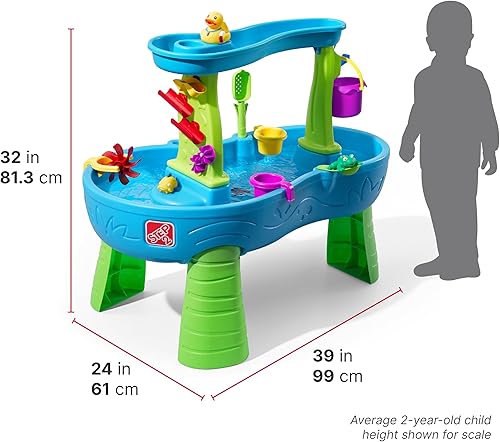
Not every American family has sprawling suburban lots. Many of us work with modest yards, small patios, or even apartment balconies with limited outdoor space. this’s 34×27 inch footprint makes it practical for real-world properties. It’s substantial enough to feel special and engaging, yet compact enough to fit most outdoor spaces without dominating the entire area.
The vertical design maximizes play value from minimal floor space. Rather than spreading horizontally like some water tables, this design builds upward with the two-tier structure. You get extensive play features and capacity without requiring half your backyard. For families with space constraints, this efficient water table design makes outdoor water play accessible rather than impossible.
The Playdate and Social Hub
this transforms your home into the neighborhood playdate destination. Other parents love bringing their children to your house because the entertainment is built-in, safe, and genuinely engaging. The multi-station design accommodates 3-4 children comfortably, making it perfect for typical playdate sizes without the crowding that creates conflicts.
Birthday parties reach new levels with a play station as the centerpiece activity. Set it up with full accessories, and you have an entertainment station that keeps party guests occupied for the entire event. it handles different ages remarkably well—toddlers splash and pour while older preschoolers engineer elaborate maze configurations, all using the same equipment productively.
Practical Maintenance for Busy Parents
American families need outdoor toys that don’t create additional work. this delivers low-maintenance operation through thoughtful design. The built-in drain plug makes emptying effortless—no tipping or struggling with heavy water-filled basins. Quick rinse, drain, done. Total time: under two minutes.
The durable plastic construction withstands harsh summer sun, occasional winter neglect, and everything in between without requiring special care. A weekly quick clean with a garden hose maintains it perfectly. No painting, no rust treatment, no complex maintenance schedules. For families already juggling work, childcare, and endless commitments, this maintenance simplicity makes the difference between a play station that actually gets used versus one that becomes a guilt-inducing dust collector.
Multi-Season Value
While marketed for summer water play, creative families discover this provides value across multiple seasons. During warm months, it’s obviously a water activity centerpiece. But in fall, fill it with autumn leaves for sensory exploration. In spring, use it for mud kitchen play or gardening activities. Some families even fill it with snow during winter for controlled cold-weather play.
This extended usability maximizes your investment. Rather than a toy used intensely for three months then stored away, it structure becomes a versatile outdoor play station adaptable to seasonal variations and changing interests. It’s the difference between seasonal entertainment and year-round play value.
Pro Setup Tips for Maximum Enjoyment
Position your play station on level ground to ensure the rain effect works properly—uneven surfaces affect water flow patterns. Place it near a water source for easy refilling but not so close that wet children track water directly into your house. Consider slight shade to prevent water from heating excessively on scorching days, though full sun is fine in moderate climates. Keep towels and a change of clothes nearby in a designated “water station” area. Establish a simple routine: rinse toys after use, drain it, and let it air dry to prevent algae growth. These five-minute habits extend the water table’s lifespan and ensure it’s always ready for spontaneous play.
Water Table Comparison: Finding Your Perfect Match
American families face overwhelming choices when selecting a play station. How does this rain showers model compare to alternatives across different price points, sizes, and feature sets?
As an Amazon Associate, we earn from qualifying purchases at no extra cost to you.
Two-Tier Water Table vs. Single-Basin Models
Basic single-basin water tables offer straightforward water containment—essentially fancy tubs with legs. This two-tier water table provides genuine interactive features that create dynamic play rather than static splashing. The rain effect, elevated activities, and gravity-driven water movement make it fundamentally more engaging. Children tire of simple basins within weeks, while multi-level water tables sustain interest for entire summers and beyond.
Price points are comparable, making the feature difference even more significant. For similar investment, why choose basic water containment over interactive learning features? The two-tier design delivers dramatically more developmental value and entertainment longevity.
Large Water Table vs. Compact Alternatives
Tiny tabletop water tables appeal to apartment dwellers and space-conscious families. However, their limited capacity restricts play to 1-2 children maximum, reducing social play opportunities and causing frequent conflicts. This mid-sized water table strikes the perfect balance—substantial enough for genuine multi-child play, yet compact enough for typical American yards and patios.
The 5-gallon capacity is ideal: enough water for meaningful play, not so much that filling becomes laborious or emptying becomes a production. Tiny water tables require constant refilling during play sessions. Enormous models waste water and create emptying challenges. this size hits the practical sweet spot for families.
| Feature | this | Basic Single Basin | Compact Tabletop | Premium Sand/Water |
|---|---|---|---|---|
| Interactive Features | Rain effect, spinner, maze wall | Minimal or none | Basic only | Extensive but complex |
| Accessories Included | ✅ 13-piece complete set | ⚠️ Minimal (2-4 pieces) | ❌ Usually none | ✅ Varies by model |
| Child Capacity | 3-4 children comfortably | 2-3 children | 1-2 children maximum | 3-5 children |
| Water Capacity | 5 gallons (ideal balance) | 3-5 gallons | 1-2 gallons (limited) | 6-10 gallons (excessive) |
| Footprint Size | 34″ x 27″ (yard-friendly) | 30″ x 24″ similar | 18″ x 12″ (tiny) | 48″ x 36″ (huge) |
| Drain Plug | ✅ Easy emptying | ⚠️ Some models | ❌ Manual only | ✅ Usually included |
| Age Range | 18 months – 6 years | 18 months – 5 years | 12 months – 3 years | 2 – 8 years |
| Best For | Engaged multi-child play | Budget-conscious basics | Apartments, small spaces | Dedicated play areas |
Water Table vs. Kiddie Pools
Kiddie pools appeal as obvious summer solutions, but create significant challenges compared to water tables. Pools require constant supervision due to drowning hazards. They demand frequent complete water changes to prevent bacterial growth. They become slimy and disgusting quickly. Standing pool water attracts mosquitoes. The hassle-to-entertainment ratio heavily favors water tables.
This water table provides similar cooling relief and water play fun without the safety paranoia and maintenance nightmares pools create. Children stay engaged longer with interactive features versus simple splashing. Cleanup is dramatically easier with drain plugs versus emptying heavy pools. For families seeking water play benefits without pool drawbacks, water tables win decisively.
Water Table: The Complete Honest Assessment
After two full summers of intensive use, countless playdates, and watching dozens of children interact with this water table, here’s the unvarnished truth about what it does brilliantly and where it has natural limitations.

Why This Water Table Excels
- Two-tier design creates authentic rain effects that sustain interest
- Spinning rainbow wheel provides mesmerizing visual appeal
- Customizable maze wall offers 24 different water path configurations
- Complete 13-piece accessory set included—no additional purchases needed
- Generous 5-gallon capacity accommodates extended play sessions
- Convenient drain plug makes emptying effortless in under 2 minutes
- Accommodates 3-4 children comfortably without crowding
- Compact footprint fits typical American yards and patios
- Durable plastic construction withstands harsh outdoor conditions
- Multiple play stations reduce sibling conflicts naturally
- Develops fine motor skills, STEM thinking, and social cooperation
- Low maintenance requirements fit busy family schedules
- Weather-resistant for year-round outdoor storage in most climates
- Reasonable price point for features and quality delivered
Limitations to Consider
- Requires level ground for rain effect to work optimally
- Small accessories can get lost easily without organization
- Water heats quickly in full sun on extremely hot days
- Children outgrow by age 6-7 typically
- Algae develops if water sits stagnant for extended periods
- Initial assembly takes 30-45 minutes
- Not suitable for indoor use due to size and splash factor
- Plastic fades slightly after years of direct sun exposure
Caring for Your Water Table
Proper maintenance extends this water table from a single-summer toy to a multi-year investment that potentially serves multiple siblings or gets passed to friends. Here’s everything American parents need to know based on real-world experience.

Initial Assembly Guide
Assembling this water table takes approximately 30-45 minutes with two adults working together. The instruction manual provides clear visual guides. Most connections involve aligning tabs with slots and pressing until pieces click securely. No special tools required beyond basic screwdrivers typically included. The trickiest part is usually connecting the upper tier to the lower basin—having one person hold while another secures makes this significantly easier.
Pro tip: Assemble your water table directly in its final location rather than building it elsewhere and relocating. While not impossibly heavy when assembled, the structure is awkward to maneuver through doorways or around yard obstacles. Choose your spot, bring the unassembled pieces there, and build in place.
Daily Maintenance Routine
After each play session, the ideal water table routine takes under 5 minutes total. Rinse accessories with clean water to remove dirt and debris. Use the drain plug to empty the basin completely. Rinse the entire water table structure briefly with a hose. Let it air dry. This simple routine prevents 90% of common water table problems including algae growth, mosquito breeding, and bacterial buildup.
Many families establish a “water table cleanup” ritual where children help rinse toys and pull the drain plug as part of transitioning from play to next activities. This teaches responsibility while making maintenance a collaborative family task rather than parental burden.
Weekly Deep Clean
Once weekly (or after particularly muddy play sessions), give your water table a thorough cleaning. Mix mild dish soap with water and scrub all surfaces with a soft brush. Pay special attention to crevices and corners where dirt accumulates. Rinse completely with clean water. This deeper cleaning prevents buildup that creates the gross slimy feeling that makes water tables unappealing.
Check the drain plug regularly to ensure it’s sealing properly and hasn’t developed cracks. Inspect all accessories for damage—cracked cups or broken pieces should be discarded to prevent sharp edges that could cause injuries during enthusiastic play.
Seasonal Storage Considerations
In most American climates, this water table can remain outdoors year-round. The durable plastic withstands temperature fluctuations from summer heat to winter cold. However, regions with harsh winters benefit from simple winterization: empty completely, clean thoroughly, flip upside down to prevent snow/ice accumulation, or move to covered storage like garages or basements.
For families who disassemble seasonally, label pieces during initial assembly or take photos of connections. Spring reassembly becomes dramatically easier when you remember how everything fits together rather than puzzling over mysterious tabs and slots.
Troubleshooting Common Issues
Rain effect not working properly: Ensure the water table sits on completely level ground. Check that upper tier connections are fully seated and not leaking. Verify nothing is blocking water flow channels. Sometimes simply relocating to flatter ground solves this issue.
Algae or slime developing: This indicates water is sitting stagnant too long. Establish stricter empty-after-use routines. On extremely hot days, change water mid-session if it’s been sitting several hours. Consider adding a capful of white vinegar to water table water (safe for children, inhibits algae naturally).
Accessories getting lost: Designate a specific storage container for water table pieces. Some families use mesh bags that allow wet toys to drain while keeping everything together. Establish “all toys back in the bin” rule before leaving the water table area.
Plastic becoming faded or brittle: This happens after years of direct sun exposure. UV-resistant plastic delays this, but eventually all outdoor plastic shows wear. Position the water table with some shade if possible. Consider using a cover during extended non-use periods. When plastic finally deteriorates (typically after 5+ years), it’s reached natural end-of-life and should be replaced for safety.
Water Table: Complete FAQ
Every question answered from real American families

What age range works best for this water table?
How much space do I need for this water table?
Is assembly difficult for this water table?
How do I prevent algae growth in my water table?
Can multiple children play with this water table simultaneously?
What’s the best way to fill and empty this water table?
How do I keep water table accessories organized?
Does this water table work well in full sun?
Can this water table be used indoors?
How long does this water table typically last?
What’s the water table’s drain plug system like?
Can I use this water table with sensory materials besides water?
Why This Water Table Works for American Families

After two full summers of daily use, countless playdates, neighborhood gatherings, and observing dozens of children interact with this water table, here’s the definitive assessment: this rain showers model succeeds because it understands the difference between flashy marketing gimmicks and genuine play value that sustains engagement across months and multiple children.
This water table doesn’t try to be everything—it won’t satisfy elementary-age children seeking extreme water park experiences, won’t work for families with zero outdoor space, and won’t appeal to minimalists avoiding plastic outdoor toys entirely. And that’s perfectly acceptable, because those aren’t the problems it’s designed to solve.
What this water table does brilliantly is provide genuine, sustained outdoor engagement for the toddler and preschool demographic that represents some of the most challenging parenting years. These are children too young for structured sports, too old for infant toys, too energetic for indoor activities, and too unpredictable for elaborate planning. They need immediate, accessible, reliably engaging entertainment. This water table delivers exactly that.
The rain shower effect isn’t decorative—it’s engineered specifically to create the cause-and-effect learning that captures young minds. The spinning rainbow wheel isn’t random—it provides the visual feedback and control opportunities that sustain engagement. The customizable maze wall isn’t excessive—it’s the exact level of complexity that allows growth from simple pouring to complex engineering thinking as children develop.
The 13-piece accessory set demonstrates understanding of real play needs. Each piece serves distinct purposes and enables different play patterns, preventing the monotony that happens with generic water toys. The variety means children discover new activities and combinations across multiple play sessions rather than exhausting possibilities in one afternoon.
Two summers later, my twins still choose water table play over screens regularly. Not because it’s novel anymore. Not because I force outdoor time or limit alternatives. They return to this water table because it facilitates the kind of engaged, creative, satisfying play that genuinely fulfills their developmental needs—the same reason generations of children have loved water play.
Watching Emma and Jack collaborate on elaborate water engineering projects, witnessing neighborhood children gather around our water table like it’s the community hub, observing the pure joy on toddler faces when they create their first “rain”—these moments validate the investment better than any specification chart or expert review.
This water table has earned its permanent place in our family’s summer routine not through marketing promises but through consistent demonstration that quality outdoor play equipment never becomes obsolete, regardless of how much technology surrounds our children. For American families seeking toys that genuinely work, this water table delivers exactly what childhood summers should be: wet, wild, wonderful, and completely unforgettable.
No Responses